Abstract Landscape Painting Explained: Techniques, Color Layering, and Creative Process.
- Elisa Gomez
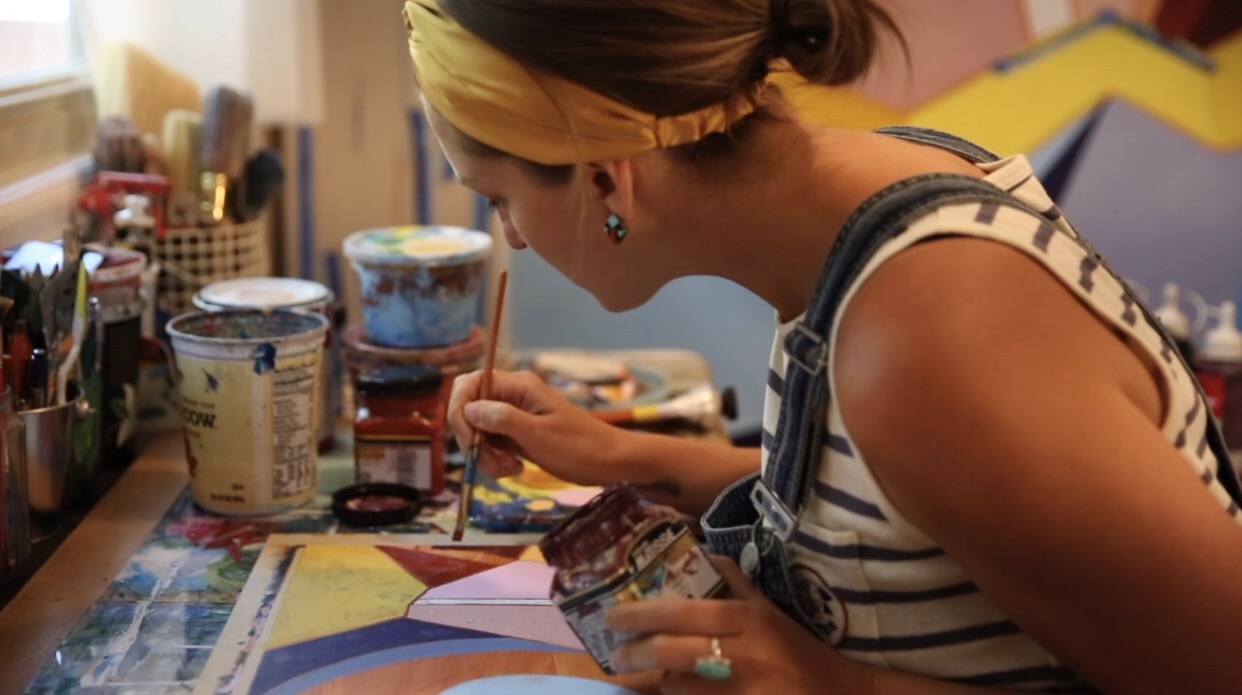
- Jun 15
- 11 min read
How observation, memory, and deliberate technique transform landscape into layered abstraction.
People often look at an abstract landscape and assume the artist simply let go. Loose marks, unconventional color choices, surfaces that feel more like weather than scenery. The assumption is that abstraction means freedom from decision-making.
It, of course, does not.
Every abstract landscape I create begins with a specific kind of looking. Not copying, not photographing with my eyes, but reading a landscape for its energy: the weight of a horizon, the temperature shift between shadow and sunlight, the rhythm of hillsides layered on top of each other. That observation becomes the architecture of the painting.
What looks intuitive on the finished surface is the result of a sequence of choices made at every stage, learned over years of training.
My main message of this post: abstract landscape painting is not the absence of structure. It is structured, translated into color, texture, and gesture rather than literal form.
In the sections below, I'll walk through the full process as I practice it: what abstraction actually means in landscape painting, why artists choose it, how I move from observation to composition, and the specific techniques, tools, and color layering methods that build a finished work.
What abstract landscape painting is (and is not)
Why abstraction serves landscape art
My process from observation to finished composition
Texture techniques and how to use them with purpose
Color layering and how depth is built
The best tools for abstract landscape work
Common misconceptions
What Is Abstract Landscape Painting?
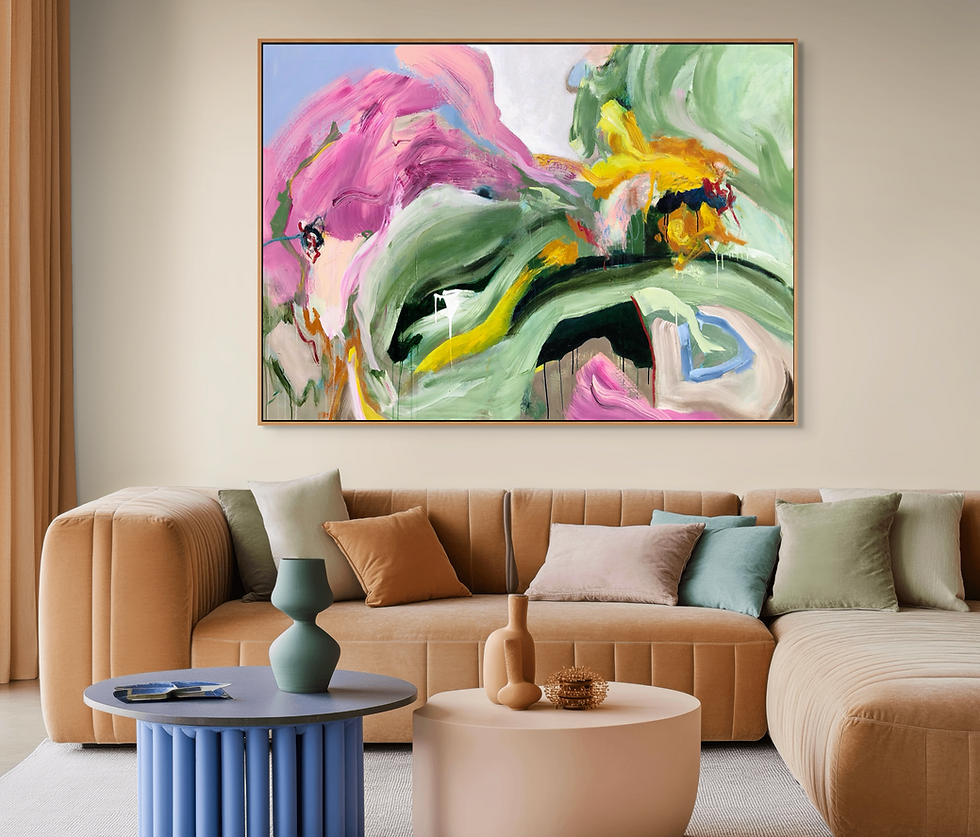
Abstract landscape painting keeps the essence of a place while reducing or transforming its literal details. The goal is never to reproduce a scene. It is to translate atmosphere, composition, emotional memory, and movement into visual form.
Abstraction exists on a spectrum. At one end, a painting may retain recognizable cues: a horizon line, a suggestion of land mass, a sky-to-earth relationship. At the other end, the landscape origin may be nearly invisible, present only in the color temperature or the directional energy of the marks. Most of my work sits somewhere between those poles, where the place is felt rather than named.
As artist Jaison Cianelli describes it, abstract landscapes "can represent an idea or express the artist's emotions, using unreal color, exaggerated forms, and texture to convey feeling" rather than literal depiction. The landscape becomes a starting point for something more direct than documentation.
Abstraction is not about abandoning observation. It is about editing aggressively, keeping what carries meaning and removing what merely describes. Often, it is a practice in learning when to hold back and when to let loose.
Why Artists Use Abstraction in Landscape Art
Abstraction is not a style choice made for novelty. It is a practical decision about what a painting can do that neither photography nor illustration can.
Kevin Gellatly puts it perfectly: "The gap between the landscape and the art is where abstraction thrives, tethered to lived experience in nature." That gap is where the painter's interpretation lives.
There are several reasons artists consistently return to abstraction when working with landscape:
Mood over record. A literal painting can describe a place. An abstract painting can make the viewer feel the pressure of a storm, the stillness of early morning, or the liveliness of the forest without depicting any of those things directly.
Material presence. Abstraction allows texture, weight, and surface quality to become part of the meaning. A scratched canvas or a built-up impasto gesture carries information that a smooth, representational surface cannot.
Selective emphasis. Abstraction gives the artist control over what the eye follows. By removing literal detail, color relationships, value structure, and mark direction can do the compositional work more forcefully.
Emotional directness. When a viewer is not occupied with identifying objects, they respond to the painting's energy more immediately. Abstraction directly brings forward the work and the feeling it carries.
For anyone living with art, this matters. Abstract landscapes do not illustrate a location. They generate an atmosphere that lives within a space rather than simply decorating it.
How I Turn Landscape Inspiration into Abstraction
My process does not begin simply at the canvas. It begins with paying attention.
When I encounter a landscape that holds my interest, I am not cataloging its features. I am registering its energy: the direction in which the light is moving, the temperature contrast between zones, and the spatial weight of open versus dense areas. That reading becomes the material I work with.
Contemporary teaching practices increasingly reflect this approach. Milan Art Institute's 2026 program guidance explicitly asks artists to "start from sensory experience and memory of nature, then push toward abstraction rather than reproducing photographs."
That shift from documentation to interpretation is central to how abstract landscape work develops.
My process, step by step
Observation and reduction. I identify the two or three relationships that define the landscape's character: a color temperature shift, a dominant directional movement, and a value contrast between sky and ground. Everything else is edited out before I start to paint anything.
Active ground. I begin with washed layers of background rather than white. Starting with an active ground, as the Milan Art Institute notes, "enhances the depth and complexity of the painting" by giving every subsequent layer something to push against.
Broad value shapes. Using thinned paint, I block in the major light and dark zones without committing to detail. This establishes the painting's spatial logic before color relationships develop.
Layered color development. I build color in multiple passes, each one informed by what is underneath. Warm over cool, light over dark, transparent over opaque. The sequence creates vibration rather than flatness.
Mark-making and texture. Once the color structure is working, I introduce texture through tools, scraping, and directional marks. Texture at this stage reinforces the composition rather than decorating it.
Editing. The final stage is often subtractive. I remove, obscure, or simplify passages that are competing with the painting's core relationships.
The process is expressive, but it is not improvised. Every decision responds to what the painting has already established. It is an ongoing conversation til a piece is finished.

Texture Techniques in Landscape Abstraction Explained
Texture in abstract landscape painting is not surface decoration. It is information. A raised edge catches light differently from a smooth passage. A scraped area reveals the history of what is beneath it. A dragged gesture carries direction. Each texture decision affects how the viewer's eye moves and where it rests.
These are the methods I return to most consistently, along with the purpose each one serves:
Impasto and texture paste. Building paint up with a palette knife or heavy body acrylic creates physical depth that holds light and shadow across the surface. This technique is most effective in areas where I want to add weight, such as a landmass or a dense atmospheric zone.
Scraping and sgraffito. Drawing a palette knife, rigid tool, or even my fingers across a wet or semi-dry layer removes paint and reveals what is underneath. The result is a passage with visible history: the earlier color shows through, creating complexity without adding more paint.
Dry-brush modulation. As Artists Network describes, "dragging stiff, semi-dry paint over a dry textured surface creates broken color and complex surfaces." This is particularly useful for atmospheric zones where I want the surface to feel like light moving through space rather than a solid field or layers of plant life.
Subtractive mark-making. Rags, sponges, and dry brushes used to lift or soften wet paint create transitions and tonal gradations that feel more atmospheric than anything applied directly.
Key principle: texture should reinforce the painting's spatial logic. If a textured passage pulls the eye away from the composition's core relationships, it is working against the painting rather than for it.
The 2026 Collector's Guide to Emerging Abstract Painters notes strong collector interest in "three-dimensional texture and expressive brushwork," reflecting how materially rich surfaces have become central to the value of contemporary abstract work.

How Color Layering Creates Depth and Atmosphere
Color layering is where abstract landscape painting earns its spatial depth. A single layer of color, no matter how well chosen, reads as flat. Depth comes from the relationship between layers: what is underneath pushing through what is on top, warm passages advancing against cool ones receding, transparent glazes letting earlier marks glow through like atmospheric haze.
As Joe Bucci observes via Artists Network: "Simply putting light over light or dark over dark does nothing for a painting. Dragging light over dark and warm over cool creates vibration and depth." That principle guides every layering decision I make.
The four-stage layering sequence I use
Stage 1: Active ground. I never begin on white. A toned ground, whether a warm earth or a cool blue, unifies everything that follows. The Milan Art Institute notes that "starting with an active ground rather than white enhances the depth and complexity of the painting" because every subsequent layer has a chromatic base to respond to.
Stage 2: Transparent value blocks. Using thinned paint or fluid acrylics, I establish the major compositional space. These early passes are not the main color decisions yet but are still thoughtful choices. They are structural, mapping where the eye should travel before color relationships develop.
Stage 3: Temperature layering. Warm colors advance. Cool colors recede. I use this consistently: warm earths and ochres in the areas I want to push forward, blue-greys and cool neutrals in the passages I want to pull back.
Stage 4: Glazes and dry-brushing. Transparent layers applied over dry paint allow earlier colors and marks to glow through. Irish Art Mart's guidance on abstract layering describes this well: "Transparent layers allow earlier hues and marks to glow through, giving an atmospheric haze that feels very current." Opaque dry-brushing, applied lightly over texture, catches the raised surface and creates broken color effects.
Key takeaway: the goal of color layering is not to add more color. It is to build relationships between layers that generate spatial energy, luminosity, and atmosphere from within the surface. |
The Best Tools for Abstract Landscape Techniques
The tools you use change the painting's rhythm. A brush produces a different mark than a palette knife. A squeegee produces a different surface than a roller. Choosing tools with intention, rather than defaulting to brushes, is one of the fastest ways to expand what abstract landscape painting can do.
These are the tools I use most often and what each one contributes:
Tool | Primary Use | What It Does to the Surface |
Palette knife | Applying and scraping impasto | Builds sharp edges and physical ridges; removes wet paint cleanly |
Putty knife | Large area scraping and spreading | Covers ground quickly; creates wide, directional marks |
Squeegee | Spreading thin layers across large areas | Produces smooth, translucent fields with subtle texture variation and drips |
Rags and sponges | Subtractive softening | Lifts and blends wet paint; creates atmospheric transitions |
Stiff brushes | Dry-brush and broken color work | Drags semi-dry paint across textured surfaces for complex light effects |
No single tool is essential. What matters is understanding what each one does to the surface and choosing accordingly. Anderson Ranch Arts Center's workshop programs consistently emphasize "the integration of various materials and textures" as a defining characteristic of serious contemporary abstract practice.
Common Misconceptions About Abstract Landscapes
A few ideas about abstract landscape painting recur, and most of them misread what the practice actually involves.
"It is just random marks." Every mark in a resolved abstract landscape responds to something: a value relationship, a directional movement, a color temperature decision. Randomness produces noise. Structure produces atmosphere.
"Abstraction means ignoring the landscape." The opposite is closer to the truth. Effective abstract landscape work often begins with more attentive looking than representational painting requires, because the artist is reading for energy and relationships rather than copying surfaces.
"More detail means more depth." Value contrast and temperature shifts do the work of depth far more efficiently than added detail. A well-layered abstract passage can read as spatially complex without a single identifiable object.
"Abstract painting is easier than representational work." Removing the scaffold of literal description makes the underlying compositional decisions more visible, not less demanding.
As Kevin Gellatly notes, strong abstraction remains "tethered to lived experience in nature." The freedom in abstract landscape painting is not freedom from structure. It is freedom to find the structure that serves the work.
Explore the Work
Abstract landscape painting is a discipline built on observation, deliberate reduction, and layered decision-making. The techniques covered here, from active grounds and temperature layering to texture methods and tool selection, are not rules. They are a vocabulary. The painter's job is to use that vocabulary in the service of a specific visual experience.
If you are drawn to work that carries atmosphere and spatial depth rather than literal description, I invite you to explore the available paintings at Elisa Gomez Art. Each piece begins with the same process I have described here.
For collectors and designers interested in a work created for a specific space, scale, or palette, commission inquiries are welcome. Begin the conversation here.

Frequently Asked Questions:
What is the difference between abstract landscape painting and expressionist landscape painting?
Abstract landscape painting reduces or eliminates literal representation, using color, texture, and mark-making to convey atmosphere and spatial energy. Expressionist landscape painting may retain recognizable forms but distorts them through color and gesture to heighten emotional impact. The two overlap frequently, but abstraction is more concerned with structure and surface than with emotional exaggeration of a recognizable scene.
Can abstract landscape painting be based on a specific location?
Yes, and many of the strongest works are. A specific place provides a starting point: its light quality, spatial proportions, and color temperature. The painting does not reproduce the location, but the decisions made throughout the process are grounded in a real experience of that place. The result often carries a sense of specificity that invented compositions lack.
How do you know when an abstract landscape painting is finished?
A painting is finished when its core relationships are resolved, and nothing competes for attention without purpose. This is more useful than looking for completion in a literal sense. If removing or adding a passage would weaken the work's spatial logic or color structure, the painting is done. Many artists also build in a waiting period, returning to the work after a day or two to read it with fresh eyes.
What is the role of value in abstract landscape painting?
Value, the relative lightness or darkness of a color, is the underlying structure of any abstract landscape. Color temperature and texture build on top of it, but if the value relationships are weak, no amount of color complexity will create convincing depth. Most experienced painters establish value first and treat color as a secondary decision made within that structure.
How large should an abstract landscape painting be?
Scale is a compositional decision, not just a practical one. Larger formats allow gestural mark-making to read at full strength and give texture the physical presence it needs to affect a viewer from a distance. Smaller works demand tighter control and tend to favor intimate color relationships over broad atmospheric effects. The right scale depends on where the work will live and what visual experience it is meant to generate within that space.
Is it better to use oil or acrylic paint for abstract landscape techniques?
Both are well-suited to abstract landscape work, but they behave differently. Acrylics dry quickly, which allows faster layering and easier integration of mixed media. They also accept a wide range of media, from fluid inks to heavy texture pastes. Oils remain workable longer, which supports blending and wet-into-wet techniques, and they produce a depth of color that acrylics approximate but rarely match. Many painters use acrylics for early layers and oil for final development.
How do abstract landscape painters approach composition without a literal reference point?
Composition in abstract landscape work is built from the same principles as any painting: value structure, directional movement, edge variation, and visual weight. Without a literal reference, the painter relies more consciously on these principles. Many artists begin by establishing a horizon relationship, even an implied one, because it immediately creates a spatial logic the viewer can orient to. From there, the composition develops through the painting's internal logic rather than through observation.
What makes an abstract landscape painting feel like a landscape rather than pure abstraction?
Landscape cues are often minimal but powerful. A horizontal division between a lighter upper zone and a darker lower zone reads as sky and ground, almost regardless of how abstract the marks are. Color temperature also carries landscape information: warm light at the top of a canvas reads as sky, cool neutrals below read as earth. These structural signals allow a painting to feel grounded in place even when every other element is nonliteral.
How do professional artists price abstract landscape paintings?
Pricing typically reflects scale, medium, exhibition history, and the artist's professional standing. Most established artists use a consistent per-square-inch or per-square-foot formula applied to canvas dimensions, adjusted depending on whether the work is an original, a limited-edition print, or a commission. Commission pricing also accounts for the additional time involved in consultation, palette development, and scale-specific preparation. For original works by Elisa Gomez Art, pricing is available upon request.
How long does it typically take to complete an abstract landscape painting?
The time varies considerably depending on the scale, technique, and the number of layers the work requires. A painting built through multiple transparent glazes may take several weeks to complete, with drying time between sessions. Larger works with significant texture development can take longer still. The editing phase, where passages are removed or simplified, often takes as much time as the building phase. A work is rarely finished in a single session, and most serious abstract landscape painters consider the time between sessions part of the process.


Comments