Custom Abstract Murals for Homes: How to Commission, Design, and Install Statement Artwork.
- Elisa Gomez
- May 27
- 13 min read

For homeowners and designers ready to transform a space with original art
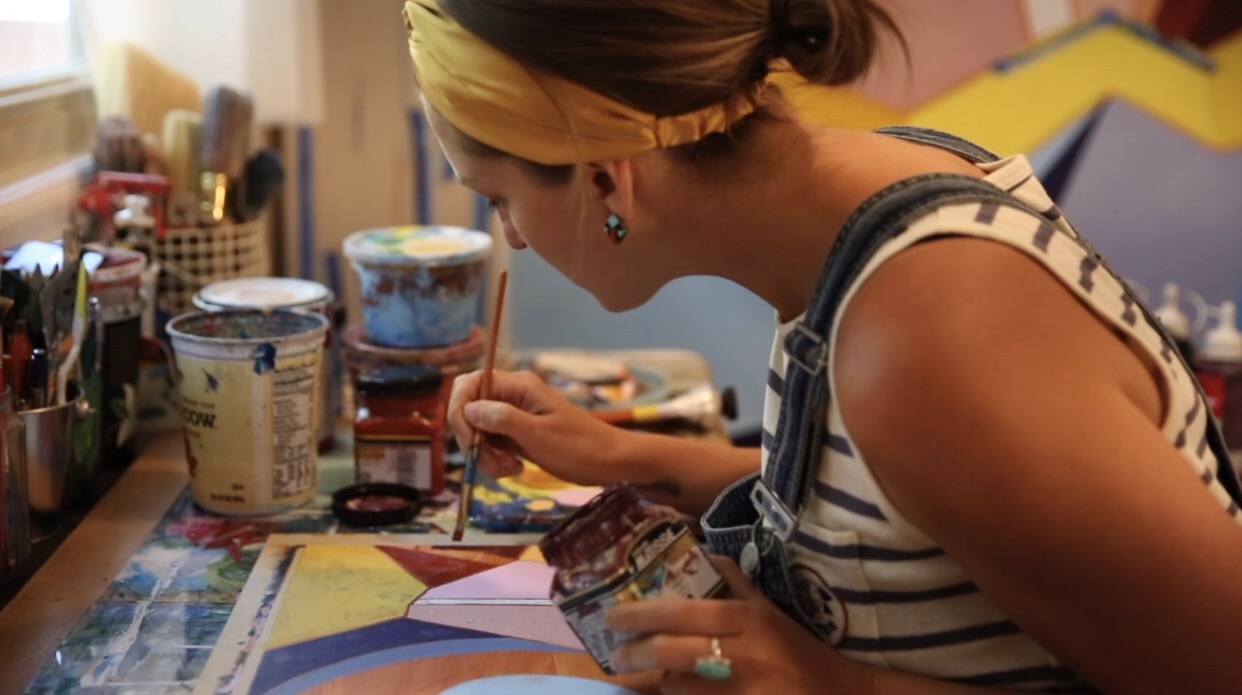
When I begin a residential mural, the first conversation is never about paint. It's about how a room feels when you walk into it, what the light does in the afternoon, whether the space needs more calm or more energy, and what the walls are currently doing to the people living there.
A custom abstract mural changes more than a wall. It shifts the rhythm of a room, introduces scale that no framed piece can match, and creates a focal point that organizes everything around it. The effect is atmospheric before it's decorative.
Most homeowners who begin exploring murals don't start with a finished concept. They start with a feeling: a desire for something more personal, more resolved, or simply more alive than what paint alone can offer. That is where I love to begin.
What this guide covers:
How abstract murals work in residential spaces and what they actually do to a room
Where they work best and how to think about placement
How to choose a style, palette, and mural type that fits your home
What the commissioning and installation process looks like in practice
What Is a Custom Abstract Mural?
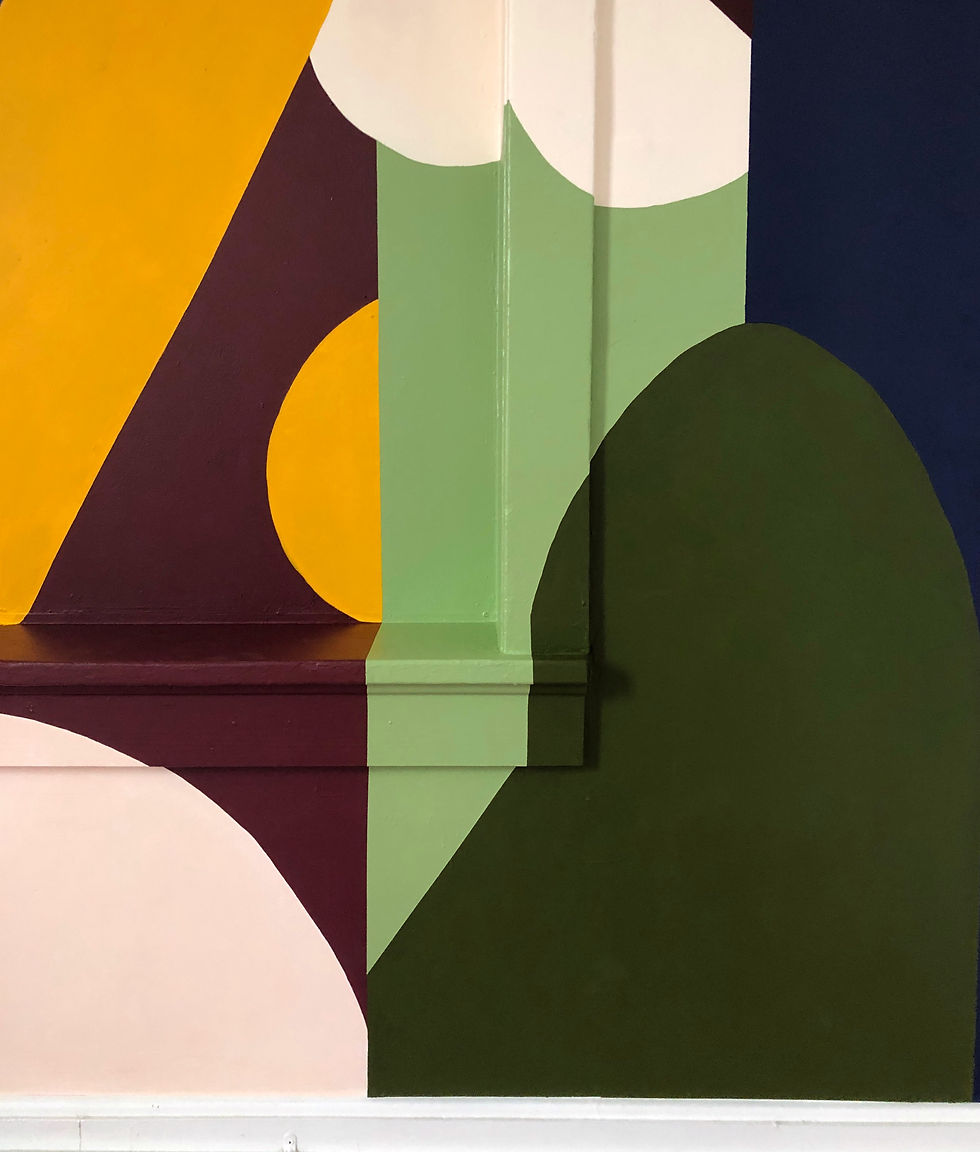
A custom abstract mural is a site-specific artwork designed for a particular wall, room, and architectural setting. Unlike framed art, it becomes part of the room itself, responding to scale, light, furniture placement, and sightlines in a way that a canvas on a hook never can.
The distinction from off-the-shelf wall décor matters here:
Format | What it is | Best for |
Custom hand-painted mural | Original artwork created directly on your wall | Permanent, site-specific, highest visual integration |
Large custom painting on canvas | Original work made for a specific space but portable | Flexibility, above mantels, feature walls, hallways, etc. |
Wallpaper mural | Printed design applied as adhesive panels | Renters, temporary installs, fast turnaround |
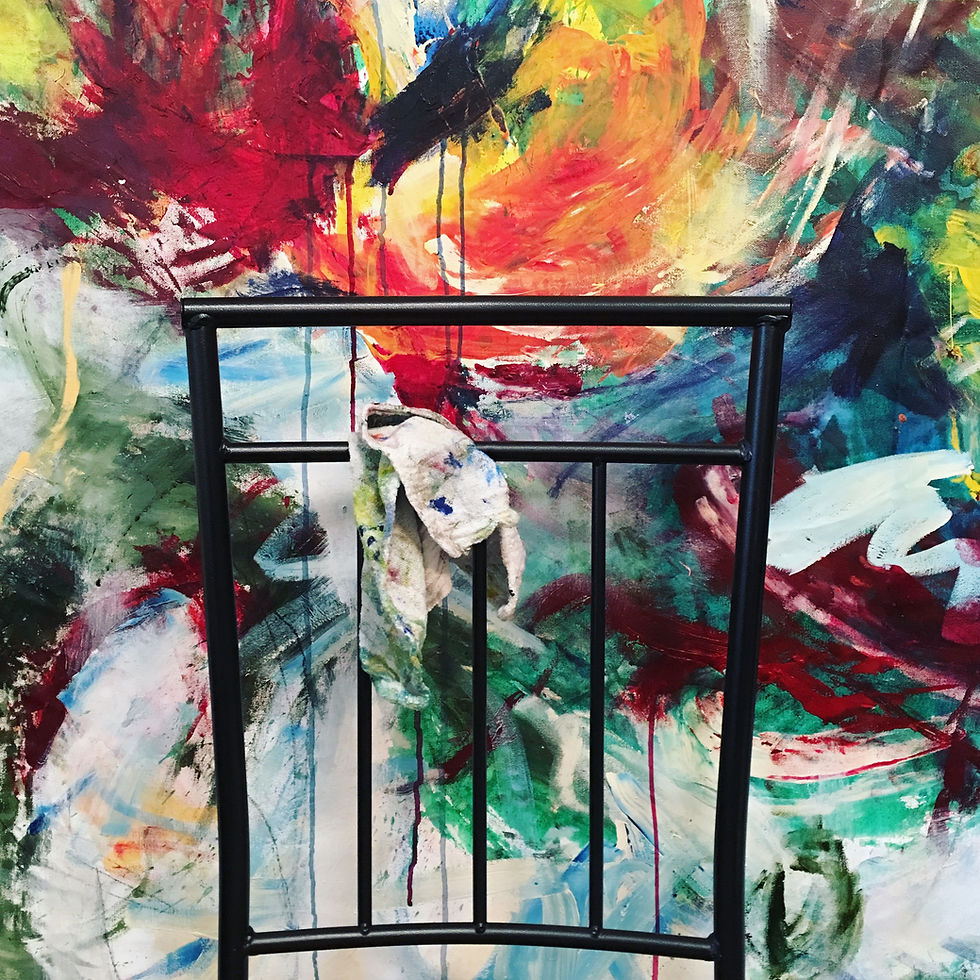
In the context of abstract work, a mural rooted in nature-inspired movement, layered color, and gestural mark-making goes further than pattern or illustration. It introduces a visual language that is specific to the artist and specific to the space, which is what makes it feel integrated to your space rather than applied.
Why Add an Abstract Mural to Your Home?
The honest answer is atmosphere. A well-placed abstract mural changes how a room feels before it changes how it looks.
"Abstract wall art can make a living room feel energized, and a bedroom feel calm, simply through the interplay of color, line, and form." - Oikar Studio |
That shift happens through scale, color, and movement working together in a way that smaller pieces rarely can achieve. A mural doesn't compete with the room. It becomes the room's foundation.
What a mural actually does to a space:
Creates a focal point that anchors furniture layout and reduces visual clutter without adding more objects
Introduces a scale that transforms proportions, making large rooms feel purposeful and smaller rooms feel more expansive and energetic
Shapes mood through color and gesture, whether the goal is calm, energy, depth, or softness
Integrates with architecture in a way that feels deeply considered rather than decorative
Reduces the need for layered décor by doing more with a single surface
The 2026 design direction reinforces this. As Extra Large Wall Art's 2026 trend report puts it: fewer pieces, bigger statements. Homeowners are moving away from gallery walls and decorative layering toward single works that carry the room.
Because the work is custom, it can be designed around your specific architecture, lighting conditions, and palette, which is what sets a commissioned mural apart from anything you can source ready-made.
Best Rooms for Custom Abstract Murals.
There is no single right room for a mural. The better question is: where in your home does a surface already carry visual weight, and what would it do if that weight were intentional?
> Living rooms and dining areas:
These are the most common starting points, and for good reason. Large walls behind sofas, above dining tables, and along entry corridors are among the most popular mural placements in residential interiors. The scale of a living room can hold a full-wall abstract treatment and benefit from it, particularly when the mural establishes rhythm and focal structure that the furniture then responds to.
Immersive, scenic abstracts and expressive gestural works both perform well here. The key is to match the mural's visual energy to the room's level of activity.
> Bedrooms and restorative spaces:
Bedrooms call for a different kind of mural. Softer palettes, quieter movement, and more restrained mark-making tend to support the calm that restorative spaces need. Run Pwell's 2026 mural trend report notes that murals in wellness and bedroom spaces are increasingly used to create calm, immersive environments rather than visual statements.
A nature-inspired abstract in muted greens, warm neutrals, or soft earth tones can transform a bedroom wall into something that genuinely supports rest.
> Home offices:
Color psychology matters more in a home office than most homeowners expect. Cooler tones and organic abstraction can support focus without feeling clinical. Warmer, more energetic palettes can keep creative work moving. The wall behind a desk is also one of the most-viewed surfaces in any video call, which has made home office murals increasingly intentional.
> Nurseries, playrooms, and kids' rooms:
These spaces deserve their own detailed treatment, which is why they will be covered in depth in a companion article on nursery and kids' room murals. The short version: softer, layered abstracts work well in nurseries, while bolder, more playful color and movement suit playrooms. The choice of paint finish and material durability matters significantly in these spaces.
> Kitchens, patios, and garden walls:
Kitchens and outdoor spaces introduce material and durability considerations that go beyond standard interior mural work. Surface preparation, moisture resistance, and finish selection all change depending on the environment. These are also covered in more detail in supporting articles on kitchen murals and outdoor garden and patio murals.
The clearest signal for any room: if a wall already draws the eye, a mural gives that attention somewhere to land.
How to Choose the Right Abstract Mural Style.
Style should respond to the room, not just personal taste in isolation. The architecture, the existing furnishings, and the amount of visual movement the space can accommodate all inform what kind of abstract work belongs there.
A few practical starting points:
Look at the lines in the room. Clean architectural lines and minimal furniture tend to suit organic, flowing abstraction that introduces softness and contrast. More eclectic or layered interiors can hold bolder, more structured mark-making.
Consider the light. North-facing rooms with cooler, flatter light often benefit from warmer, more luminous palettes. South-facing rooms with strong natural light can carry deeper, more saturated work without it feeling heavy.
Think about movement vs. stillness. Gestural, expressive abstracts introduce energy and rhythm. More restrained, tonal work creates depth without visual noise. Neither is better; the choice depends on what the room needs.
Reference current design directions if they fit. Feathr's 2026 wallpaper and mural trend report highlights Japandi and warm minimalism as dominant residential directions, both of which favor calm, neutral, and design-aware abstract treatments. If your home leans that way, a restrained, nature-inspired abstract will integrate more naturally than an expressive, high-contrast one.
You don't need a finished concept before reaching out to an artist. Reference images, a description of the room's feeling, and a sense of what's missing are enough to begin a productive conversation.
How to Choose the Right Color Palette.
Color is where most mural decisions become either very right or very wrong. The default is often to match the palette to existing furniture or wall colors. The better approach is to ask what feeling the room is meant to hold, then choose a color that supports that feeling.
Palette by mood and room use:
Muted earth tones and warm neutrals (ochre, terracotta, sand, warm white) create a sense of calm and openness. They work well in bedrooms, living rooms with natural materials, and any space where the goal is rest or quiet focus.
Soft blues, sage greens, and dusty mauves introduce a cooler, more contemplative quality. These suit bedrooms, reading spaces, and home offices where sustained attention matters.
Jewel tones (deep emerald, ink blue, plum, burnt sienna) add drama, intimacy, and depth. They work in dining rooms, entry halls, and living spaces where the mural is meant to be a genuine statement.
High-contrast combinations with strong darks and luminous lights create energy and visual rhythm. These suit living rooms, studios, and any space that can hold a more active visual presence.
A useful rule: designers typically use softer, gradient abstracts in bedrooms and high-contrast work in communal living spaces. That distinction holds in most residential settings regardless of style direction.
Color also interacts with scale. A palette that feels balanced on a small reference image can feel overwhelming at full-wall scale, or conversely, a muted palette can feel more resolved and immersive when it fills an entire surface. This is worth discussing with the artist before finalizing a direction. For more on choosing color and style for abstract work in the home, the guide on choosing nature-inspired abstract art for your home covers the selection process in depth.
Wallpaper Murals vs. Hand-Painted Abstract Murals vs. Custom Paintings.
This is one of the most common questions homeowners ask before committing to a mural project. The answer depends on how permanent the installation needs to be, what level of visual integration matters, and what role portability plays.
Format | Integration | Permanence | Best suited for |
Hand-painted mural | Highest - becomes part of the wall | Permanent | Homeowners wanting full site-specific artwork |
High - designed for the space, but movable | Portable | Above mantels, feature walls, future flexibility | |
Wallpaper mural | Moderate - printed, not original | Removable | Renters, temporary installs, pattern-led design |
Wallpaper murals are renter-friendly and easy to replace, making them a practical choice for temporary applications or for homeowners who want flexibility. But a printed wallpaper mural cannot replicate the texture, layering, and spatial responsiveness of original hand-painted work.
A large custom painting occupies the middle ground. It can be commissioned for a specific wall, scaled to the architecture, and designed with the room's palette and atmosphere in mind, while remaining portable if the homeowner moves or the room changes. This is often the right choice for a fireplace wall, a dining room feature, or any situation where a single focal work matters more than full-wall coverage.
Hand-painted murals offer the deepest integration. The work responds to the actual surface, the light in the room, and the architectural context in ways that a flat print cannot. For homeowners who want the mural to feel like it belongs in the space rather than sit on it, this is the most effective option.
How to Commission a Custom Home Mural.
The commission process is more conversational than most homeowners expect. It begins with the room, not the brief.
A typical commission process:
Initial conversation. Share the room, the wall dimensions, the desired atmosphere, and any reference imagery. You don't need a finished concept. A description of how you want the space to feel is a strong starting point.
Palette and style direction. The artist works with your input to develop a color and compositional direction that fits the architecture and the room's use.
Wall assessment. Surface condition, existing finishes, and any preparation needed are reviewed before work begins. This affects both the timeline and the material approach.
Execution and timeline. A residential mural typically takes anywhere from a few days to a couple of weeks, depending on scale and complexity. The timeline is agreed upon before work starts.
Final review. The completed work is reviewed in the space, with any finishing touches applied before the project closes.
The strongest commissions come from homeowners and designers who approach the process as a collaboration rather than a specification. The more context the artist has about the room and the feeling you're working toward, the more resolved the final work will be.
For interior designers sourcing a mural artist for a residential project, the same process applies. Bringing wall dimensions, finish specifications, and the client's palette direction to the first conversation will make the process faster and more precise.
How the Installation Process Works.
Installation is the part of the mural process that homeowners most often underestimate, not in terms of difficulty, but in terms of how much the surface affects the outcome.
Before the mural begins:
Wall preparation is essential. Cracks, uneven texture, or peeling paint need to be addressed before any mural work starts. A well-prepared surface affects both the quality of the finish and the longevity of the work.
Primer selection depends on the wall material and the paint or medium being used. An artist will typically specify what preparation is needed during the initial assessment.
Room access and protection need to be planned. Furniture, flooring, and adjacent surfaces should be covered or moved to give the artist clean working conditions.
During and after installation.
The execution phase for a residential mural is generally low-disruption. Most homeowners can continue using other areas of the home during the process. Drying and curing times vary depending on the medium and the number of layers, and the artist will advise when the room is ready for normal use.
For kitchens and outdoor spaces, finish selection matters significantly. Interior murals in standard living spaces typically use high-quality water-based paints with a protective topcoat. Kitchens benefit from a washable, moisture-resistant finish. Outdoor murals require UV-resistant paint and a weatherproof sealant to protect against sun, moisture, and temperature variation.
A practical note: always ask the artist what finish and sealant will be used, and what the recommended care and cleaning approach is for the completed work.
How to Find the Right Artist or Custom Mural Source.
The right artist for a residential mural is not simply the one with the most technical skill. It's the one whose visual language fits the space and whose way of working fits the homeowner.
What to look for in a mural artist's portfolio:
Consistent visual language. A strong portfolio shows a recognizable approach to color, mark-making, and composition, not just a range of styles executed on request.
Spatial awareness. Look for evidence that the artist understands how work lives in a room: scale, placement, and the relationship between the mural and its architectural context.
Residential experience. Commercial and residential mural work requires different sensibilities. A portfolio that includes residential commissions shows the artist understands how people live with art every day.
Collaborative process. Commission work is a dialogue. An artist who asks questions, shares process images, and invites input will produce work that feels more integrated with the home.
For abstract work specifically, it's worth spending time with the artist's existing paintings and recent work before initiating a commission conversation. The visual language of an artist's studio practice is what will translate into the mural, and that language should feel aligned with the home before the brief is even written.
You can explore recent abstract paintings and mural work at elisagomezart.com/recent-work and review the full mural portfolio at elisagomezart.com/murals.
Start with the Feeling You Want the Room to Hold.
Every mural I've worked on began the same way: not with dimensions or paint specifications, but with a conversation about atmosphere. What does this room need to feel like? What is it missing? What would make it feel more like the home you actually want to live in?
Those questions don't require a finished brief. They require honesty about the space and a willingness to work toward something specific rather than something safe.
The practical decisions, style, palette, mural type, surface preparation, and installation follow naturally from that clarity. The homeowners and designers I work with who arrive at the best outcomes are the ones who start with the feeling and trust the process from there.
If the work at Elisa Gomez Art feels aligned with what you're imagining for your space, the custom mural page is the right place to begin the conversation.

Do I need to have a specific vision before reaching out to a mural artist?
No. Most productive commission conversations begin with a feeling rather than a finished concept. Knowing how you want the room to feel, which walls feel underused, and which colors or textures you're drawn to is enough to get started. The artist's role is to translate that direction into a visual language specific to your space.
How much wall space does a mural need to be effective?
A mural doesn't require a full wall to work. Accent walls, alcoves, stairwells, and even narrow corridors can hold abstract work effectively when the scale and composition are designed for the specific surface. The key is that the work is planned for the space rather than scaled down from something larger.
Can a mural work in a rented home?
Hand-painted murals are permanent by nature, so they're better suited to owned properties or rentals where the landlord has given permission. For renters, high-quality peel-and-stick wallpaper murals are a practical alternative. That said, some renters do commission hand-painted work with landlord approval, particularly in longer-term leases where personalizing the space matters.
How do I know if an artist's style will translate well to my wall?
Look at their existing large-scale work, not just studio paintings. An artist who has completed residential murals will show how their visual language scales up and how it responds to architectural context. If you can visit a completed mural in person, that's the most reliable way to understand how the work lives in a room.
What is the difference between a mural commission and buying an existing painting?
A commission is a collaborative process where the work is developed specifically for your space, palette, and atmosphere. An existing painting is a finished work that you adapt your space around. Both are valid, but a commission gives you far more control over how the final piece integrates with your home's architecture and light conditions.
How do I prepare for the first consultation with a mural artist?
Bring wall dimensions, photos of the room in natural light, and a rough sense of the atmosphere you're working toward. Reference images of interiors you admire are helpful, even if the style differs from the artist's work. The more context you can share about how the room is used and what it currently lacks, the more productive the first conversation will be.
Are there rooms where abstract murals don't work well?
Abstract murals can work in almost any room when the scale, palette, and visual energy are calibrated correctly. The spaces where they tend to underperform are very small, dark rooms where the mural has no room to breathe, or rooms with heavily patterned existing surfaces that compete with the work. In those cases, a custom painting on canvas is often a better fit than a wall-integrated mural.
How long does a hand-painted residential mural typically last?
A well-executed hand-painted mural using quality acrylic or oil-based paints with a protective topcoat can last for decades in a standard interior environment. Longevity depends on wall preparation, paint quality, finish selection, and how the surface is cleaned and maintained over time. Outdoor murals have a shorter lifespan without UV-resistant paint and weatherproof sealant, but can still last many years with proper materials.
Can the same artist handle both the design and the installation?
Yes, and in most cases that's the better arrangement. An artist who designs and executes the mural brings a consistent visual intention to the work from concept through to completion. Separating design from installation, as sometimes happens with wallpaper murals or printed reproductions, can introduce inconsistencies in how the final piece reads in the space.
What is the best way to care for a hand-painted mural after installation?
For interior murals, gentle dusting with a soft dry cloth is usually sufficient for regular maintenance. Avoid abrasive cleaning products or anything that could lift the topcoat. If the mural was finished with a protective varnish or sealant, light, damp cleaning with a mild solution is generally safe. The artist should provide specific care guidance based on the materials and finish used in your particular installation.


Comments