How to Choose Nature-Inspired Abstract Art for Your Home
- Elisa Gomez
- Apr 13
- 9 min read
(And What to Do When Nothing Off the Shelf Quite Fits)

There is a particular kind of quiet that a well-chosen painting brings to a room. Not silence exactly, but a sense that the space has settled into itself. I notice it every time I finish a large canvas and step back: the color shifts, the texture catches the light, and the room feels less like a container and more like a place.
That quality is hard to manufacture with a print or a mass-produced canvas. It comes from the specific decisions an artist makes in the moment of painting: the weight of a mark, the way one layer of paint bleeds into another, the choice to leave a section alone. Nature-inspired abstract painting carries this quality more than almost any other genre, because it draws from something already calibrated to the human nervous system.
Research backs this up. Studies on biophilic design show that natural elements in interior spaces reduce stress by up to 20%. Google Trends data shows search interest in "abstract wall art" doubled between August 2024 and August 2025. And with 68% of urban adults reporting chronic stress, according to Gallup, the home has become the primary space where people seek restoration.
This guide is my attempt to help you find the right painting for your home, whether that means selecting something from an existing collection or beginning a conversation about a custom piece made specifically for your walls.
What Nature-Inspired Abstract Painting Actually Is
The phrase gets used loosely, so let me be specific about what I mean by it.
Nature-inspired abstract painting is not landscape art. It does not depict a mountain range or a forest in recognizable form. Instead, it translates the experience of nature into color, gesture, and texture. The feeling of standing at the edge of a canyon at dawn. The way light moves across water. The layered depth of a forest floor. These become the inspiration for a feeling I convey on the canvas.
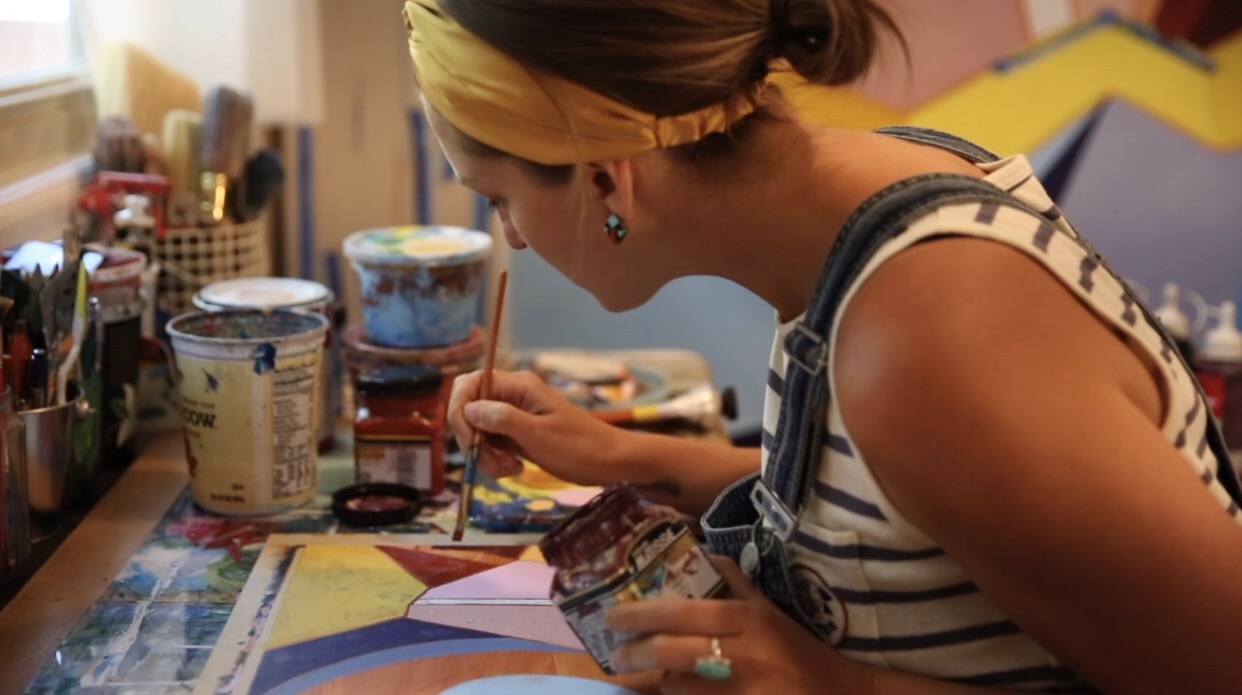
In my own work, I begin with observing the outdoors and then eventually return to the studio to work from memory, emotion, and accumulated colors that struck me. What ends up on the canvas is not what I saw but what I felt while seeing it. That distinction matters because it means the painting communicates directly with the viewer's senses rather than asking them to identify a place.
Why This Works in Modern Interiors
This is where the design logic becomes clear. Abstract art adds visual energy to a room without competing with the furniture, the architecture, or other art. Nature-inspired abstraction adds a further layer: it brings the emotional register of the outdoors inside, which is precisely what biophilic design is trying to achieve through material and spatial choices.
Biophilic refers to the innate human affinity for nature and natural systems. It stems from the hypothesis that humans have a genetic need to connect with the natural world for psychological and physical well-being, influencing design to reduce stress and improve focus.
Organic palettes (terracotta, pine green, deep blue, warm ochre, sunshine yellow) integrate with natural wood, linen, and stone surfaces
Gestural marks add movement without visual noise
Layered texture catches light differently depending on where you’re looking at it, making the painting feel alive in the space
Scale flexibility means a single piece can anchor a large wall or bring intimacy to a smaller room
How to Choose the Right Painting for Your Space:
The most common mistake I see first-time buyers make is choosing art last, after all the furniture decisions are finished. By that point, they are selecting something to fill a gap rather than to define the room. The painting should be part of the spatial conversation from the beginning, or just something that is speaking to you.
Here is how I think about it, room by room.
> Living Room:
The living room is where scale matters most. A piece that spans at least two-thirds of the sofa's width will anchor the seating area and provide a clear focal point in the room. For high-ceilinged or open-plan spaces, a single large canvas or triptych (48 inches wide or more) tends to work better than a gallery arrangement, which can fragment the visual energy.
For palette, I recommend working from the room's existing neutrals outward. If the walls are warm white and the furniture is linen or natural oak, a painting with layered blues, greens, and warm ochres will connect the space rather than compete with it.
> Bedroom:
The bedroom calls for a different register. Here, I think about color temperature first: cooler blues and muted greens promote calm, while deeper, more saturated tones add weight and presence. A large horizontal canvas above the bed functions like an architectural element, extending the visual width of the headboard wall. Aim for a painting that is roughly ¾ the width of the bed, and can even be a vertical piece if the ceilings have the space.
> Fireplace Mantel:
This is one of the most specific placements in a home, and one of the most rewarding to get right. The mantel wall is a natural focal point, so the painting needs to carry real presence. Scale up: a piece that feels large in the studio will feel proportionate above a fireplace. Vertically, the painting can occupy the dominant portion of the wall.
Originals vs. Prints: What the Difference Actually Means.
This is a question I get often, and the honest answer is that both have a place depending on what you need.
A print can be a smart choice for a secondary space, a rental property, or when you are still developing your taste and not ready to commit to a significant purchase. Signed, limited-edition prints from working artists retain some value and can carry a connection to the original work.
But an original painting does something a print cannot. The surface is built up over time: layers of acrylic and oil pastel, the texture of canvas showing through in places, drips that catch your eye, and thick paint adding depth. That dimensionality draws the eye in a way that a flat reproduction does not, and it can change depending on where you hang it.
The practical difference for your home:
Originals command a wall. They become the room's anchor and conversation point.
Prints work best as supporting elements in a curated arrangement.
Originals appreciate in value as an artist's reputation grows; prints generally do not unless they are from a documented limited edition.
The relationship with the artist is part of what you own: the provenance, the story, the knowledge of where and why it was made.
For a meaningful wall in a primary living space, I recommend investing in an original if the budget allows. The difference in presence is immediate and lasting.
Tips for Buying Original Abstract Art Online.
Most of my collectors find me online before they ever see the work in person. Buying original art through a website or gallery platform requires a different kind of trust than walking into a physical gallery, and there are a few things I tell every prospective buyer to look for.
What to Look for in an Artist's Work:
Consistent body of work. A serious artist develops a recognizable visual language over time. Look for some form of coherence, but also know that artists experiment with different styles, and that will be reflected in their work. Consistency can be in style or in the continual experimentation of their work.
Process transparency. Artists who show their studio practice, their materials, and their process give you a window into the work's authenticity and help you connect to the process as well.
Exhibition and publication history. This is absolutely not a gatekeeping requirement, but it does signal that the work has been shared by other professionals. Check for gallery representation, press features, or juried shows.
Clear photography. Good detail shots of texture and edges reveal what a painting actually looks like. If the photography is flat or low-resolution, don’t be afraid to ask an artist for more images to see a work better.
The best online purchase I have heard a collector describe was one where they had already spent time reading the artist's writing, watching process videos, and studying the work across multiple series. By the time they bought a piece, it felt like a considered decision rather than an impulse. |

When to Commission a Custom Painting:
There are walls that no existing painting will quite fit. Not because the right work does not exist, but because the space has specific requirements: a precise dimension, a palette built around an unusual architectural detail, a mood that needs to be calibrated to the room rather than adapted from something made for a different context.
This is when a commission makes sense.
The process is more collaborative than most people expect. It begins with a conversation about the space: the wall dimensions, the existing palette, and the feeling you want the room to carry, and the paintings you already enjoy. From there, I develop a few digital mock-ups based on our conversation. You weigh in on the direction, and I take it into the studio. Major decisions and process images are shared along the way before the piece is finalized.
A custom painting is worth considering when:
The wall has a specific size that standard canvases do not address (above a fireplace mantel is the most common example)
You want the palette tied precisely to your interior rather than adapted from an existing work
You are furnishing a primary space and want the art to be genuinely one of a kind
You want a relationship with the artist and their interpretation of something specific to you, not just ownership of an object
Commissions typically include a customization premium of around 10% above comparable studio work, reflecting the additional design time and consultation involved. The result is a painting made for your specific walls and your specific life in your space.
If you are ready to explore what is currently available, you can view the collection of original paintings at Elisa Gomez Art. Works span a range of scales and palettes, from smaller studies in the Rhapsody Blue series to large nature-inspired canvases like Terrain Blue and Autumn Shades I.
If you have a specific wall in mind and want to talk through what a commissioned piece might look like, I would love to chat! You can reach me through the main contact page to get started.
Frequently Asked Questions:
What is nature-inspired abstract art?
Nature-inspired abstract art translates the experience of the natural world into color, gesture, and texture rather than depicting it literally. Instead of a recognizable landscape, the painting conveys the feeling of being in nature: the weight of a forest, the movement of water, the warmth of late afternoon light. The result connects with the viewer on a sensory level without asking them to identify a specific place.
Why does nature-inspired abstract art work well in modern homes?
It brings the calming emotional register of the outdoors inside without competing with furniture or architecture. Research on biophilic design shows that natural elements in interior spaces can reduce stress by up to 20%. Nature-inspired abstraction achieves this through earthy palettes, organic movement, and layered texture rather than through literal botanical imagery.
How do I choose the right size abstract painting for my living room?
A general rule: the painting should span at least two-thirds of the width of the sofa or main seating arrangement. For open-plan or high-ceilinged spaces, a single canvas 48 inches wide or larger tends to anchor the room more effectively than a gallery wall arrangement. Choosing art before finalizing furniture placement gives you more flexibility.
What abstract art styles work best in minimalist homes?
Minimalist interiors benefit from paintings with a single dominant color, open composition, and visible texture. Monochromatic nature-inspired works in muted blues, warm greens, or soft ochres add depth without visual noise. The texture of the paint surface does the work that pattern or complexity would do in a busier room.
What is the difference between an original painting and a print?
An original painting is a unique, hand-made object with physical dimensionality: built-up layers of paint, raw edges, drips, and surface variation that change with the light in the room. A print is a reproduction of that object, flat and uniform by nature. Originals command a wall and appreciate in value as an artist's reputation grows. Prints are better suited to secondary spaces or as supporting elements in a larger arrangement.
How much does it cost to commission a custom abstract painting?
Pricing varies by artist, scale, and complexity. As a general benchmark, commissions typically carry a customization premium of around 10% above comparable studio work to reflect the additional design time and consultation involved. For reference, smaller custom works can begin in the low hundreds, while large-scale pieces for primary living spaces or fireplace walls typically range from several hundred to several thousand dollars, depending on the artist and dimensions.
How do I know if a nature abstract painting is of good quality?
Look for a consistent body of work across a series, clear studio photography that shows texture and edges, and evidence of exhibition or gallery representation. Process transparency, where the artist shares how and why a piece was made, is also a strong indicator of seriousness. A painting that looks different in every detail shot, catching light and revealing depth, is almost always an original.
What size abstract painting works above a fireplace mantel?
The painting should cover most of the wall between the mantel shelf and the ceiling. Horizontally, aim for a piece at least 40 inches wide, proportioned to the mantel's length. A piece that feels large in the studio will feel appropriately scaled above a fireplace. This is also one of the most common reasons buyers commission a custom painting: standard canvas sizes rarely match the specific proportions of a mantel wall.
When should I commission a custom abstract painting instead of buying an existing work?
A commission makes sense when the wall has specific dimensions that standard canvases do not address, when you want the palette calibrated precisely to your interior, or when you are furnishing a primary space and want the art to be genuinely one of a kind. It is also worth considering when you want a working relationship with the artist, not just ownership of an object. The process is collaborative: you share the space, the palette, and the feeling you want the room to carry, and the artist develops the work from there.


Comments